My research explores how matter and light behave in some of the universe’s most extreme environments, including the strong-gravity regions surrounding black holes and the hot plasma around neutron stars. Below is a very general overview of how I do this.
If you are an undergraduate student interested in working with me, any open positions will be advertised through the UROP Portal, when available. You can also read about my approach to research mentoring here.
Dead Stars as Laboratories of Extreme Physics
When a massive star reaches the end of its life, it will explode and leave behind one of two objects: a black hole or neutron star. A black hole’s gravity is so strong that, beyond a boundary called the event horizon, not even light can escape. A neutron star packs roughly the mass of the Sun into a sphere about the size of a city, creating enormous gravitational and magnetic fields.
We cannot directly see these black holes and neutron stars, but their surroundings can be among the brightest signals in the sky. This is because sometimes black holes and neutron stars orbit ordinary companion stars and pull gas away from them in systems called X-ray binaries. Rather than falling straight inward, the gas pulled off of a companion star usually swirls into a rapidly rotating accretion disk, and as the gas moves closer to the central object, it becomes extremely hot and produces X-ray light.
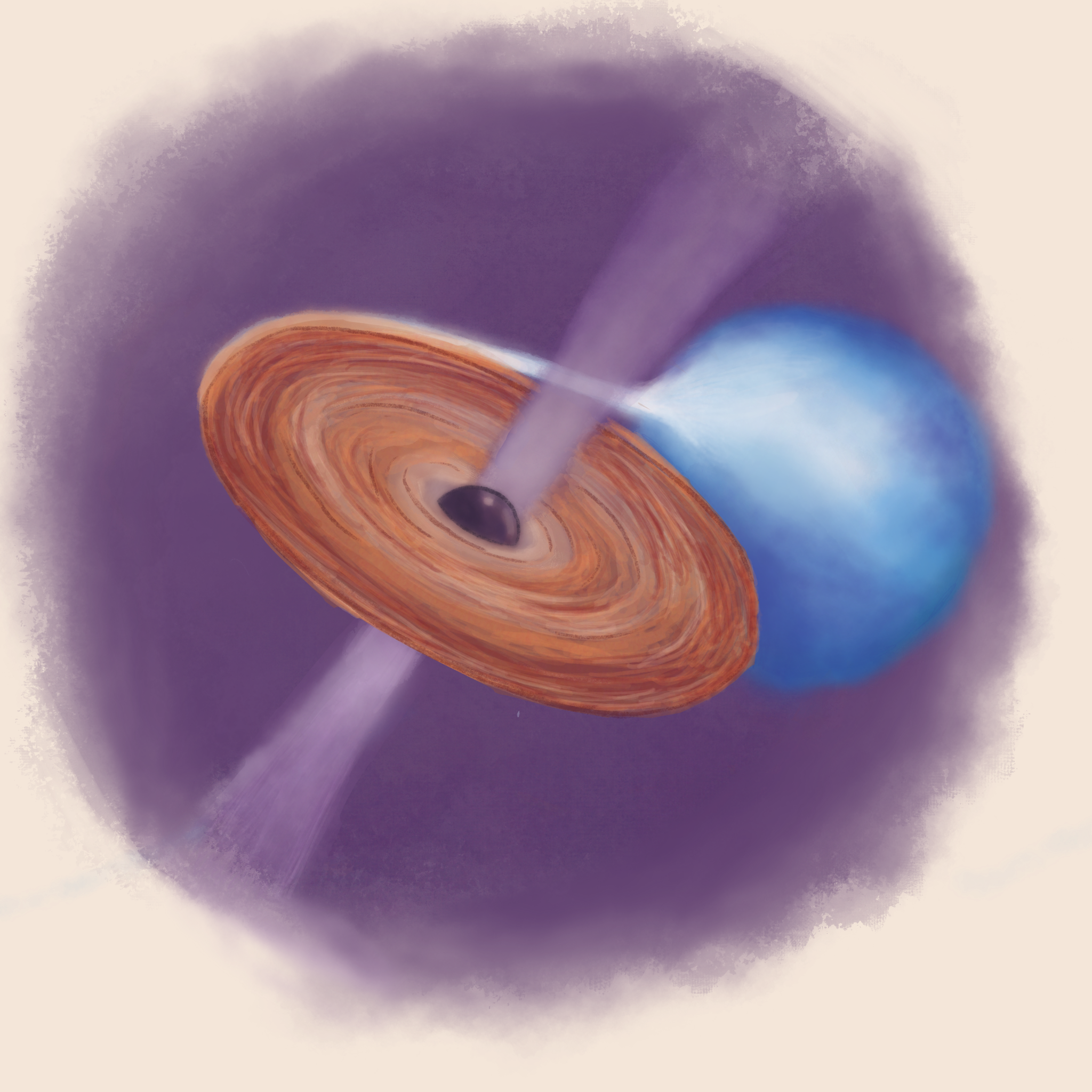
The result is a wonderfully complex environment. Accretion disks can coexist with hot clouds of energetic particles, powerful winds, narrow jets, and streams of gas guided by magnetic fields. These structures are far too small and distant to photograph directly. Instead, we study the clues they leave in the light that reaches us—using the universe’s most extreme objects as laboratories for gravity, magnetism, and the behavior of superheated matter.
Fingerprints of X-ray Light
The regions around black holes and neutron stars can reach temperatures of millions of degrees, causing them to produce X-ray light. Because Earth’s atmosphere blocks astronomical X-rays, we have to place our telescopes in space to observe them.
These telescopes collect individual packets of light called photons. Each detected photon brings us a small piece of information such as:
- Brightness: How much X-ray light reaches us and from where?
- Energy: How is that light distributed across different X-ray energies?
- Polarization: Does the light have a preferred orientation?
- Timing: How does the source change over seconds, days, or years?
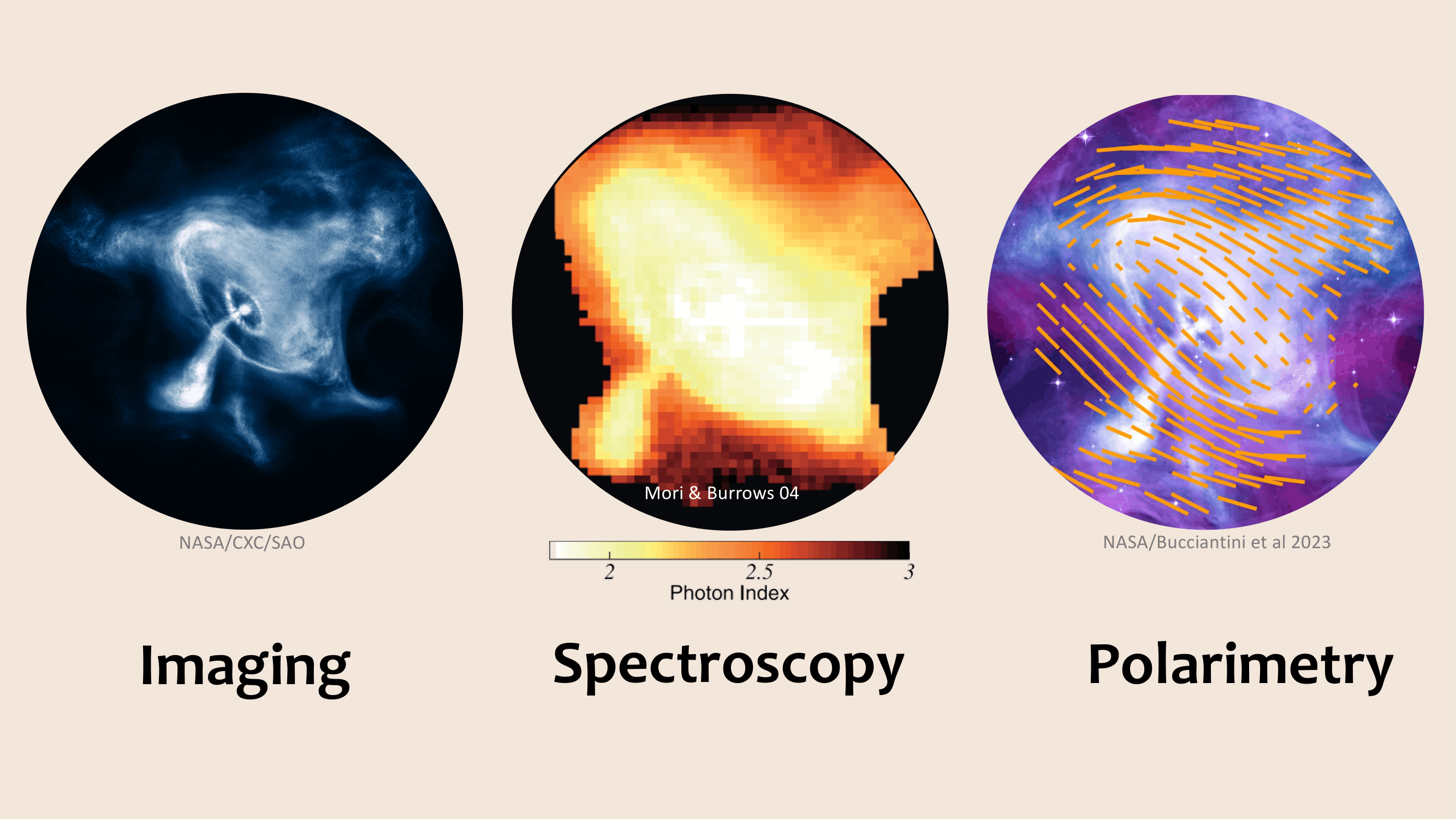
No single photon tells us very much individually, but thousands or millions of them can reveal a surprisingly detailed story. These measurements help us investigate regions that would otherwise appear as a single unresolved point in the sky.
X-ray Polarization
Although we often describe X-rays as particles (photons), light also behaves like a wave. This wave consists of electric and magnetic fields that repeatedly rise, fall, and change direction as the light travels. Usually, the electric field points in a random mixture of directions. When some directions are favored over others, the light is polarized. We encounter this on Earth when sunlight reflects from water, snow, or a wet road and produces glare. Polarized sunglasses reduce that glare by blocking light oriented in the direction favored by the reflection.


In space, polarization is like a hidden arrow carried by each particle of light. Its direction and strength can preserve information about where the light originated, what kind of matter it encountered, the magnetic fields it traveled through, and how its path was altered by gravity. This gives us a way to study the shapes and orientations of systems that are much too distant to resolve directly.
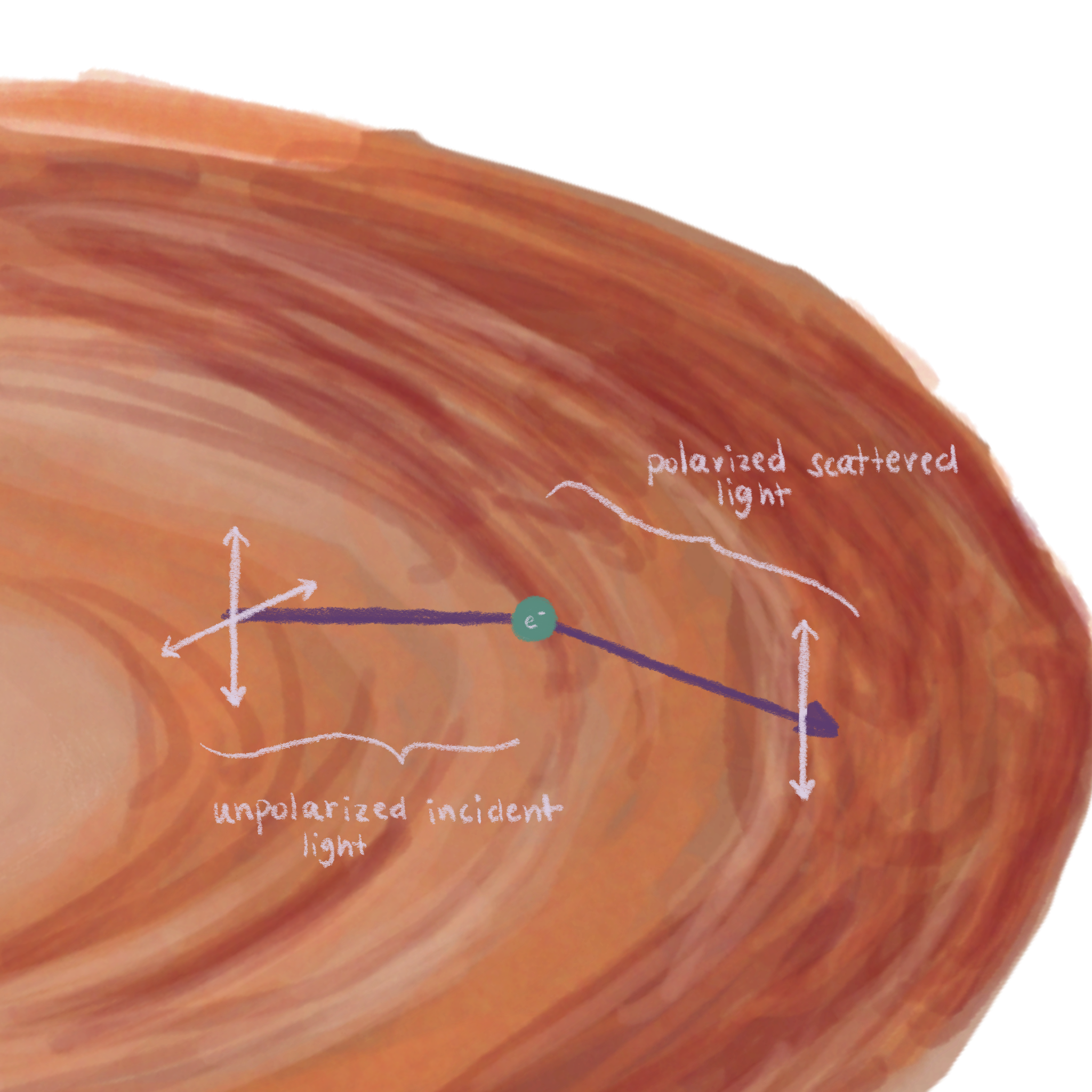
The polarization can also change with energy or time. These changes may tell us that photons of different energies come from different regions, that several structures are contributing to the light, or that the system itself is evolving. Brightness tells us how much light arrived; energy tells us what kind of light arrived; polarization helps tell us how and where that light was produced.
From Photon to Physics
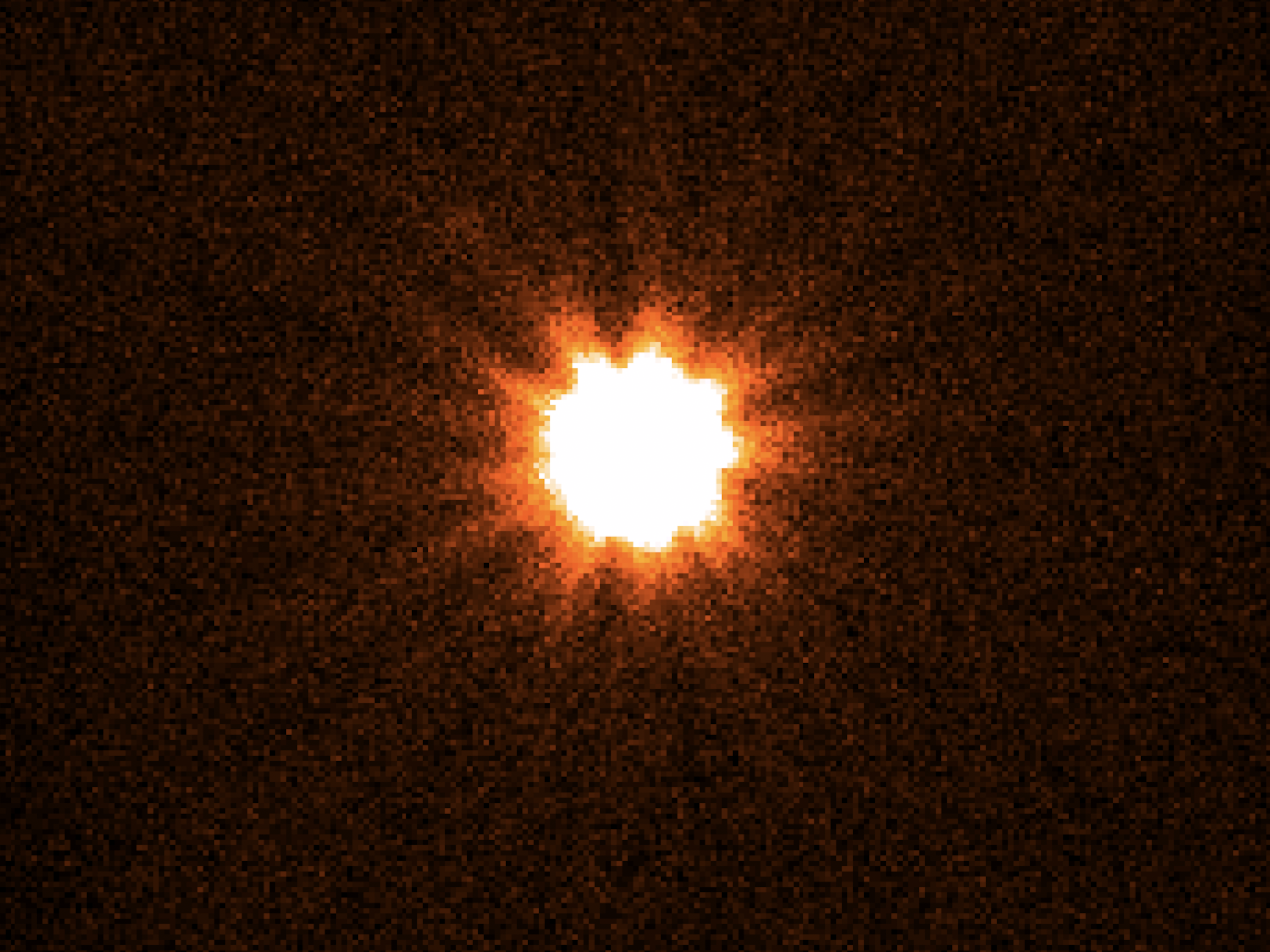
An observation from an X-ray telescope does not arrive with labels telling us which photons came from the disk, a hot plasma, or another part of the system. In fact, typically the entire black hole system appears as a single unresolved dot in a telescope image. We instead have to work backward from the detected light—almost like reconstructing a scene from a collection of clues.
We use physical models to predict what different systems should look like in X-rays. How would the light change if a black hole spun more rapidly? What if the hot plasma had a different shape? What if the magnetic field pointed in another direction? We then compare these predictions with the observations and use statistical methods to determine which explanations are best supported.
There is rarely a single, perfectly certain answer. Different physical scenarios can sometimes produce similar signals, and every measurement has limitations. A central part of my research is therefore asking not only, “What does this observation suggest?” but also, “How confidently can we say it?” By developing new ways to analyze photons and compare competing explanations, we can build a more reliable picture of some of the most extreme environments in the universe and the physics happening within!
 Swati
Swati 